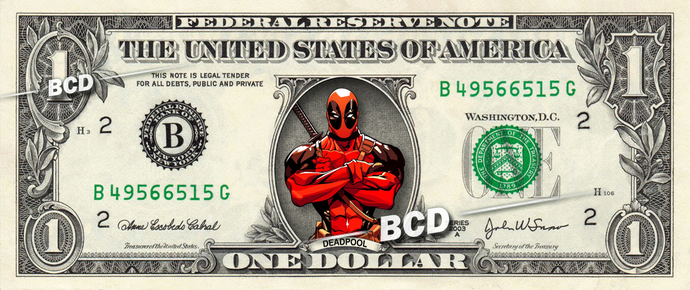
The NCAA sports landscape has widely become a tool for entertainment, not too different from your favorite Marvel Comics movie series. More and more, money is revolving around the NCAA’s ‘entertainment industry’, as NCAA football and basketball, at an exponentially greater extent than that of NCAA Olympic sports, continue to entertain a large population of the American public. But that money by and large has not moved in to the hands of the star entertainers, the NCAA athletes. Imagine the movie Deadpool in comparison to March Madness or the College Football Playoff. Deadpool’s star and co-producer – Ryan Reynolds, was compensated quite nicely along with its movie distributor and director. In March Madness, its distributor (Duke and the NCAA), and co-director (Coach Mike Krzyzewski) make and have been making large sums. The actors (Zion Williamson and company) were paid a flat fee for their star performances in March Madness with no chance for improved compensation. It is clear that the notion of Student Athlete amateurism will be dying a slow death in NCAA athletics at the hands of the demands for Name, Image, and Likeness compensation.
The mass media would have you believe that the athletes are being manipulated and ‘used’ for the benefit of their school and the NCAA. The mass media forgot that in most Power 5 schools, athletes for their respective football and basketball teams are on full tuition scholarships along with room and board included. Great additional benefits include the training table (special food for athletes), flexibility in course scheduling and attendance (and in the case of UNC, fake classes wrongly classified as ‘available to all students’), and the endowment of BMOC status during all hours when present at their respective school. Additional special treatment includes traveling academic counselors, tolerance from professors allowing missed test and class days, and other benefits that a non athlete would never get to enjoy.
I don’t have a problem with most of this (minus the fake classes for credit). Like any other star in the movies or otherwise, special treatment is part of the deal and a large part of the courting process between that star, the promotion of the movie to the public, and the production of the movie itself. NCAA Power 5 football and basketball athletes aren’t much different. There remains one major ethical problem here. For most of the Power 5 schools, acceptance requirements are ‘massaged’ for prospective student athletes when necessary to make sure that they can still play for the program that recruited them. Shhhhhh. No one talks about this. Duke University has a specific standard for academics when determining the acceptance status of a student. If that student plays basketball and Coach Krzyzewski offers him a scholarship, Coach K can ‘talk’ (demand) to the admissions department and request (demand) that acceptance standards are waived to allow the athlete to attend Duke. Is a kid that otherwise would not have been admitted to Duke without the academic waiver truly ‘attending’ Duke? If that student could not get in to Duke otherwise, then that kid likely is being provided with extra help to pass classes at Duke. That treatment sure would be great for any average student that wanted to go there.
Who is using who here? Many Power 5 schools are making millions with its football and basketball teams. (Not all are making millions, or even profiting from sports. Clemson athletics without its ballyhooed football team would be in the hole financially.) We must look at the flip side though. Student athletes are using sports as the ticket to attending a school that, in many cases, they would not be admitted to if not for the academic waiver. My guess is that Zion Williamson was quite capable of getting in to college on his own. Respected by his teachers at Spartanburg Day School as an excellent writer and a solid poet, if he were a non athlete he would have likely made it to college. However, you will have to show me Zion’s 30+ ACT or 1500+ SAT, 4.00+ GPA, and a resume of leadership beyond sports to convince me that he would have been accepted to Duke. A four year education with books, room, and board at Duke will cost you about $325,000 before any financial aid. Not bad compensation for an 18-22 year old – especially for an athlete who could not get in to Duke had they not had the gift of athleticism. Oh and the degree is thrown in for free… I’d say that the athlete gets plenty of ‘use’ out of Duke here too…
The issue doesn’t just fall on the NCAA’s shoulders. Ageism in professional sports has something to do with this too. We are considered legal adults at the age of 18. However, all NBA drafted players must be at least 19 years old during the calendar year of their draft. By forcing a basketball player to be 19 years old to participate on a team, you are requiring them to attend college, or sign as a free agent in the D-League. Trust me on this one, P-5 travel and lodging beats the socks off of D-League travel. In the NFL an athlete must have been out of high school for at least three years before playing in the NFL. At their youngest, an NFL player could be 20, again much older than that of a legal adult. NFL options are even more limited, there aren’t any great minor league alternatives for a young football player. At the least, these rules are limiting and restrictive to 18 year old adults. At the most, these rules could be considered illegal.
Don’t expect Samuel Jackson to show up with an eye-patch in the second round of this three part series, but it is time for us to take off our rose colored glasses. Let’s take a hard look at the NCAA football and basketball cash machines, and consider some alternatives to the requirement of amateurism in NCAA sports. In Part Two of this blog series, I’ll dive in to the pros and cons of some Name, Image and Likeness alternatives that may provide a fair slice of the pie to the top level NCAA athletes.
 Paul MacDonald - Sports Broadcaster